
By Sam Agogo
The Federal Capital Territory (FCT) local government elections held just hours ago have become a lightning rod for national debate, exposing deep cracks in Nigeria’s democratic process. What is usually a low-profile grassroots contest has instead turned into a defining test of whether democracy will survive beyond 2027.
The elections were overshadowed by viral videos that sparked outrage across the country. In one, a ruling party member was captured threatening opposition supporters, telling them to leave their polling location if they dared to vote for another party. This brazen act of intimidation shocked many Nigerians, who saw it as a direct assault on the principle of free choice. Another clip showed the FCT Minister allegedly telling APC supporters to “just vote and leave the rest for him,” raising fears of manipulation and undermining the credibility of the process. Reports also surfaced of Civil Defense officers and policemen storming a polling station in Kuje, allegedly seizing result sheets. Many Nigerians believe security agencies deliberately ignored these incidents, further eroding trust in the system and fueling suspicions that the irregularities were not isolated but part of a wider pattern.
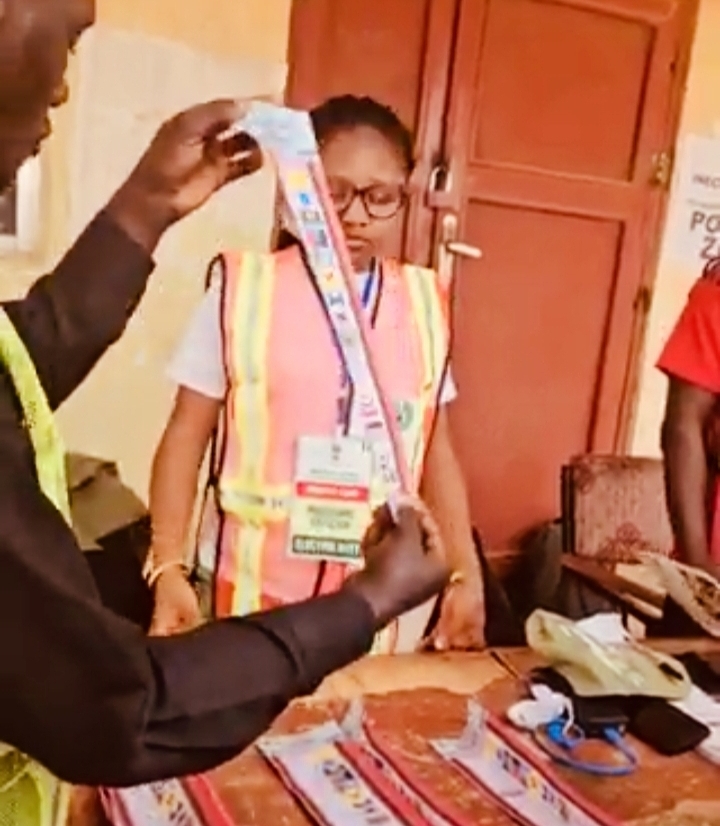
Beyond these viral controversies, several systemic failures plagued the polls. Turnout was abysmally low across wards in Jikwoyi, Karu, Bwari, Gwagwalada, Nyanya, Mpape, and Lugbe, as residents either shunned polling stations or faced disruptions despite heavy security presence. Missing party logos on ballot papers created confusion and disenfranchised voters who could not identify their preferred candidates. In some areas, curfew enforcement clashed with voting hours, leaving citizens uncertain about whether they could safely exercise their rights. INEC’s systems struggled with uploading results, raising doubts about the effectiveness of the amended Electoral Act, which was designed to strengthen transparency. Candidates also alleged that INEC officials failed to provide original result sheets in some polling units, fueling suspicions of tampering and manipulation.
Eyewitnesses reported that in certain polling stations, thugs disrupted the process, intimidating voters and scattering ballot papers. In other areas, voters complained of deliberate delays in opening polling units, forcing many to leave without casting their ballots. These irregularities, combined with intimidation tactics, paint a troubling picture of Nigeria’s electoral integrity. The sense of frustration was palpable, with many citizens questioning whether their votes truly counted or whether the outcome had already been predetermined.
Observers warn that if such practices persist, the 2027 general elections could become one of the most violent in Nigeria’s history. The Electoral Act amendments were meant to safeguard transparency, yet the inability to conduct even local elections without chaos raises serious concerns. Civil society groups, diaspora communities, and ordinary Nigerians are calling for urgent accountability. Silence, they argue, is complicity. Those who sponsor violence may reap short-term gains, but history will remember them as saboteurs of democracy.
For thugs hired to disrupt the process, the money collected cannot erase the betrayal of their communities. For electoral officers, the choices made today will define how history judges them—whether as defenders of democracy or complicit actors in its erosion. Nigeria stands at a crossroads. The FCT elections have revealed cracks that must be repaired before 2027. The survival of democracy depends not only on laws but on the collective will of citizens, institutions, and leaders to uphold integrity at every level of the electoral process.
The Abuja local government elections have become more than a contest for grassroots leadership; they are now a symbol of Nigeria’s democratic struggle. If the nation cannot guarantee fairness and transparency at the local level, then the stakes at the national level will be even higher. Every Nigerian, whether at home or abroad, must recognize that democracy is not self-sustaining—it requires vigilance, courage, and accountability. The events of this election serve as a warning that the future of Nigeria’s democracy is not guaranteed, and unless urgent reforms are implemented, the country risks sliding into a dangerous era where elections become battlegrounds rather than peaceful expressions of the people’s will.
For comments, reflection, and further conversation:
Email: samuelagogo4one@yahoo.com